
The Midori MD Notebook Journal: A Comprehensive 2026 Reference Guide
The most sophisticated notebook you'll ever own is technically unfinished. While other brands hide their construction behind heavy glue and decorative endpapers, the midori md notebook journal intentionally exposes its threaded spine to ensure a perfectly flat writing surface. You've likely felt the frustration of a pen skipping across a bulky binding or watching your favorite ink feather into a fuzzy mess on low quality paper. It's a common struggle for those who value the tactile ritual of putting nib to page.
This guide explores why Midori’s proprietary MD paper, developed in the 1960s, remains the gold standard for fountain pen enthusiasts. You'll discover the science behind this "functional canvas" and learn how to select the ideal size and ruling for your specific writing style. We'll also detail the 2026 diary lineup, including the expansive 1 Day 1 Page A5 format and its 415 pages of bleed resistant paper. By the end, you'll know exactly how to choose and protect a journal that turns every entry into a focused, tactile ritual.
Key Takeaways
- Understand the technical properties of MD Paper, including how its unique "tooth" provides precise tactile feedback for fine fountain pen nibs.
- Select the ideal midori md notebook journal format for your specific needs by comparing standard sizes like A5 and B6 Slim against specialized rulings.
- Discover why the signature thread-stitched binding and exposed spine are essential for achieving a true 180-degree flat-lay writing experience.
- Learn how to integrate minimalist analog tools into a 2026 digital detox routine to enhance focus and creative expression.
The Heritage of Midori MD: More Than Just a Notebook
True luxury often reveals itself through restraint rather than excess. The midori md notebook journal embodies this principle perfectly. Since its parent company, Designphil, began manufacturing in 1950, the focus has remained on the intimate relationship between paper and ink. This isn't a mass-market product designed for the lowest common denominator. It's a specialized tool for those who treat writing as a deliberate act and appreciate the subtle nuances of high-quality stationery.
The story of MD Paper began in the 1960s. During this era, Japanese manufacturers sought to perfect a surface that could handle the wet flow of fountain pens without bleeding or feathering. The Heritage of Midori MD reflects a broader history of Japanese craftsmanship, where every detail serves a functional purpose. By 2026, while digital tools have become ubiquitous, the MD line has seen its popularity grow among enthusiasts seeking a "digital detox" through high-quality analog materials. The brand’s longevity stems from its refusal to follow fleeting trends, choosing instead to perfect a single, exceptional writing experience.
Designphil calls their core philosophy "comfort in writing." This translates to a paper with a slight "tooth" or texture. It provides just enough resistance to give the writer tactile feedback, ensuring you feel the connection between the nib and the fibers. It's a sensory experience that smooth, coated papers often lack. In 2026, this specific tactile feedback is why the journal remains a global staple in the stationery community. It transforms a mundane task into a grounded, meditative ritual that rewards the user for slowing down.
The Designphil Legacy
Designphil balances heritage with modern utility by maintaining strict control over the manufacturing process. The "MD" mark stamped on every notebook isn't just branding; it's a quality guarantee. It signifies that the paper has passed rigorous tests for texture, ink absorption, and durability. This commitment to precision ensures that a midori md notebook journal purchased today offers the same legendary performance as those produced decades ago. The brand successfully bridges the gap between traditional Japanese paper-making and the needs of modern journalers who demand consistency.
The Aesthetic of Simplicity
The most striking feature of Midori is what's missing. You won't find heavy cardboard covers, flashy graphics, or aggressive branding. This intentional minimalism removes the psychological barrier of "ruining" a beautiful book. The cream-colored paper is another deliberate choice. It provides a warm, inviting background that reduces eye strain during long writing sessions. By stripping away the unnecessary, Midori provides a blank canvas that invites creators to focus entirely on their thoughts rather than the object itself.
The Science of MD Paper: Why Your Fountain Pen Loves It
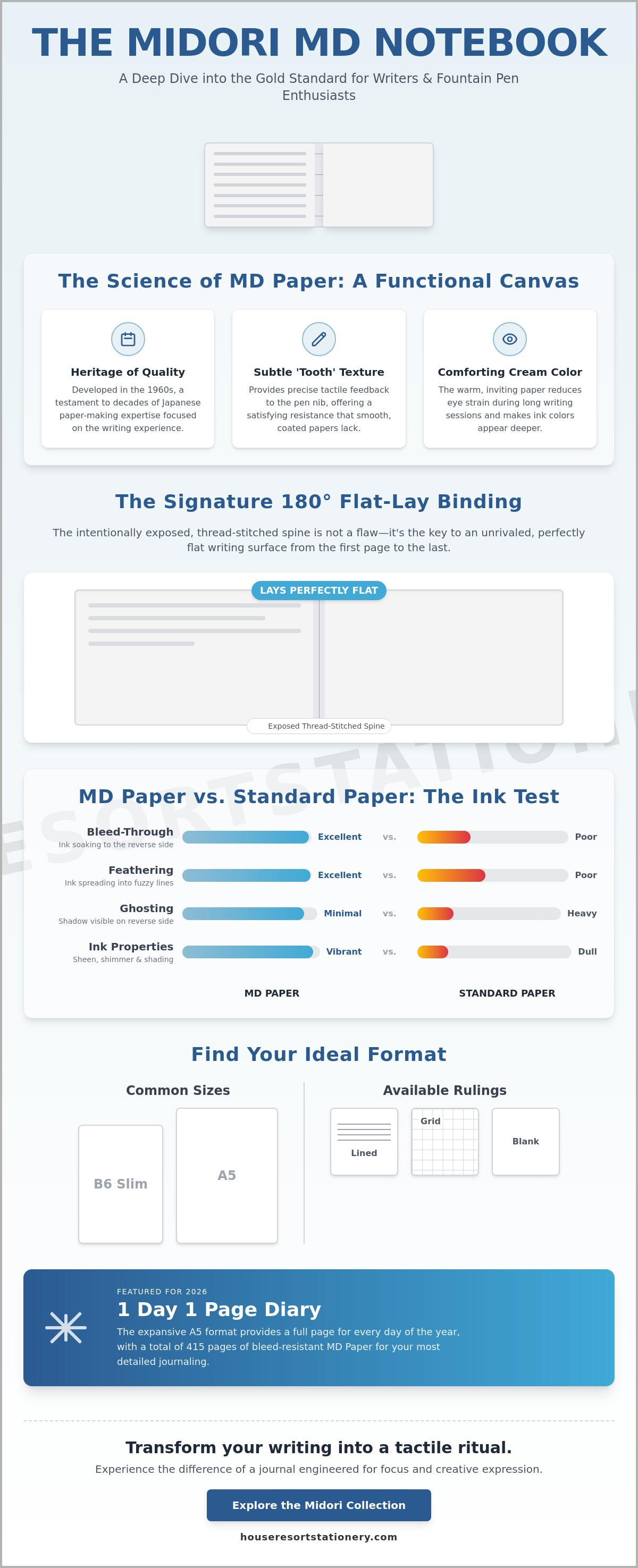
Technical excellence in paper manufacturing often requires a balance between ink absorption and surface smoothness. The midori md notebook journal achieves this through a proprietary sizing process that prevents ink from soaking too deeply into the fibers. This resistance is the secret to its legendary bleed-resistance. Even when using a wet-writing broad nib or a flex pen, the ink remains on the surface. This allows the liquid to dry in a concentrated layer, which is why you'll see such vibrant color and crisp lines without the fuzzy edges caused by feathering.
For enthusiasts who enjoy high-sheen or shimmering inks, this surface tension is critical. When the ink pools slightly before drying, the metallic particles and dye concentrations settle on top of the page. The result is a dramatic visual effect that cheaper, more absorbent papers simply swallow. When you are choosing your perfect format, consider how the subtle cream tint of the MD paper acts as a warm base for your ink collection, often making blue and green tones appear deeper and more complex.
Ink Performance and Drying Times
Drying times on MD paper are a deliberate middle ground. It's faster than the ultra-coated papers that can take minutes to set, yet slow enough to preserve the ink's shading characteristics. Nibs ranging from Extra Fine to Double Broad perform consistently here. While a very wet pen might require a few extra seconds of patience, the payoff is a complete lack of "ghosting" on the reverse side. You can confidently use both sides of every sheet, effectively doubling your writing space. If you're looking for a pen that complements this surface, you might browse the curated selections at HouseResort Stationery to find a match for your style.
The Sensory Writing Experience
The defining characteristic of a midori md notebook journal is its "tooth." Unlike glass-smooth papers that can feel slippery and hard to control, MD paper offers a slight, intentional friction. This texture provides tactile feedback, telling your hand exactly where the nib is at all times. It's a sensation similar to a high-quality pencil on fine art paper. This feedback prevents the "skating" effect often found on glossy surfaces, giving you greater precision over your letterforms. This balance of weight and texture ensures that the paper feels substantial and premium without being overly thick or bulky in your bag.
Choosing Your Perfect Format: Sizes and Rulings
Selecting the right midori md notebook journal requires an understanding of how physical space influences your thoughts. The brand offers a structured hierarchy of sizes, each serving a distinct purpose in a professional or creative analog workflow. For 2026, the collection remains anchored in the classic Japanese dimensions that enthusiasts rely on for consistency and quality. Whether you're a minimalist planner or a prolific journaler, the dimensions you choose will dictate the rhythm of your writing.
The 2026 MD Notebook Diary lineup demonstrates this versatility through specific page counts and layouts. The standard A5 diary features 175 pages, which includes a two-page annual calendar and 28 pages for monthly planning. It's a slim, efficient tool for those who need a high-level overview of their schedule. If your practice is more intensive, the "1 Day 1 Page" A5 diary offers 415 pages. With 385 pages dedicated specifically to daily entries, it provides the necessary depth for exhaustive chronicling and long-form reflection throughout the year.
Matching your handwriting style to these formats is equally important. If you use a fine or extra-fine fountain pen nib, you'll likely appreciate the structure of the smaller rulings. Those who prefer broad or stub nibs often find the larger A5 or A4 sizes more accommodating, as they provide the room needed for expressive scripts and ink shading. The specialty 2026 diaries cover the period from December 2025 to January 2027, ensuring your transition into the new year is seamless and organized.
A5 vs. A6: Portable vs. Desktop Use
The A5 format is the quintessential desk companion. It offers enough horizontal width for comfortable writing, making it the primary choice for morning pages or detailed project notes. It feels substantial and stays open on a flat surface without effort. The A6 is its nomadic counterpart. It's designed for the pocket, serving as a reliable catcher for spontaneous ideas. Between these two lies the B6 Slim. This format is particularly popular among those who appreciate a narrower page, offering a sleek profile that slides easily into a slim bag or a leather cover.
The Grid vs. The Blank Page
Rulings act as a silent partner in your writing process. The 5mm grid is highly technical, providing a discreet guide for both vertical and horizontal alignment. It's the standard for bullet journaling and precise diagrams. If you find lines restrictive, the blank version offers a "blank canvas" mindset. It encourages unrestricted sketching and non-linear note-taking. For a traditional experience, the lined ruling features a subtle horizontal guide. Midori includes a slightly thicker center line on these pages, allowing you to divide your entries into top and bottom sections for better organization.
The "Unfinished" Design: Binding and Protection
The aesthetic of the midori md notebook journal is defined by what remains visible. While most manufacturers treat the spine as a structural secret to be hidden under cardstock, Midori embraces an "unfinished" philosophy. The exposed cheesecloth tape and visible thread stitching are not merely design accents. They represent a commitment to functional transparency. This approach allows the materials to speak for themselves, highlighting the craftsmanship that goes into every signature of paper without unnecessary distractions.
This design choice solves the most common pain point for journalers: the struggle to write near the center margin. Traditional glued bindings create a "hump" that forces the writer to hold the book down with one hand. By using thread-stitched binding, Midori ensures the tension is distributed evenly across the spine. This engineering allows the notebook to lie perfectly flat from the first page to the last. It creates a seamless landscape for your thoughts, ensuring your fountain pen nib never has to fight against the curvature of the book.
Protection is handled with the same minimalist intent. Every notebook comes wrapped in a delicate sheet of glassine paper. This translucent layer provides a barrier against fingerprints and environmental dust without obscuring the understated cream cover. For those who prefer a more robust shield, the brand offers specialized covers that age alongside the paper. You can shop the full range of Midori covers and accessories to find the perfect fit for your lifestyle.
The Flat-Lay Advantage
Thread binding is objectively superior to adhesive methods for long-term durability. Glue eventually dries out and cracks, causing pages to fall out over years of use. Thread remains flexible. It allows the notebook to withstand heavy daily use without losing its structural integrity. This flat-lay design is especially beneficial for artists and bullet journalers who need to draw straight lines across a two-page spread without the interruption of a bulky binding. It's a small detail that fundamentally changes how you interact with the page.
Protecting Your MD Journal
Customization options range from the utilitarian to the luxurious. The Cordoba paper cover is a popular choice for those who value a lightweight, heavy-duty option that feels like leather but remains vegan-friendly. It's incredibly durable and resistant to tearing. For a lifetime investment, the goat leather covers develop a unique patina over time, darkening and softening with every use. Each midori md notebook journal also includes a set of index stickers. These allow you to label the spine or create tabs for organization, turning a simple book into a sophisticated archival tool.
Integrating Midori MD into Your 2026 Analog Workflow
The 2026 trend toward "slow analog" workflows is a direct response to digital saturation. A midori md notebook journal serves as a dedicated sanctuary for these mindfulness sessions. By removing notifications and blue light, you create a focused environment for deep work or personal reflection. This practice isn't just about writing; it's about reclaiming your attention span. It allows you to engage with your thoughts without the pressure of an immediate response or a blinking cursor.
Archiving your completed journals is the final step in this intentional workflow. Unlike digital files that can be corrupted or lost in the cloud, a physical library of MD notebooks provides a permanent record of your personal evolution. The uniform sizes and minimalist spines look cohesive on a bookshelf. They turn your past thoughts into a curated collection of personal history. Labeling each spine with the included index stickers ensures that your library remains organized and accessible for future reflection.
The Art of the Everyday Journal
Creative expression often starts with small, daily habits. You might combine standard text with fountain pen doodle journaling to break up long blocks of writing. This visual approach helps process emotions that words sometimes fail to capture. For those who travel, the MD notebook acts as a perfect companion to a traveler’s notebook system. You can use the standalone MD book for long-form entries while keeping your modular system for rapid logging. Setting up a 2026 "Commonplace Book" is another effective technique. Use it to curate quotes, technical notes, and ink swatches in one centralized location. The paper’s resistance to bleed-through makes it an excellent choice for testing new shimmer and sheen inks.
Curating Your Writing Ritual
Your choice of tools defines the quality of your ritual. Selecting a nib that complements the MD texture is essential for a frictionless experience. Fine Japanese nibs highlight the paper's precision, while broader European nibs showcase the ink's shading. High-quality Japanese stationery provides the foundation for a professional writing desk. It signals a respect for the craft of writing and the materials used. In a world moving at an increasingly digital pace, the enduring value of a midori md notebook journal lies in its simplicity. It remains a reliable, tactile tool that honors the heritage of analog expression. This balance of function and form ensures your writing practice remains a source of comfort for years to come.
Elevating Your Analog Ritual in 2026
Transitioning to a deliberate writing practice requires tools that respect your time and your ink. The midori md notebook journal remains a premier choice because it balances technical paper science with a minimalist aesthetic that never distracts. You're investing in a surface designed to handle high-sheen inks and fine nibs with equal precision. From the expansive 385-page daily diary for 2026 to the classic blank A5, these formats provide the necessary space for deep reflection. The thread-stitched binding ensures your focus stays on the page. It's a reliable partner for your daily ritual.
As an authorized retailer of Designphil and Midori products, HouseResort provides an expert-curated selection for the fountain pen community. We offer national shipping on all premium stationery. This ensures your next archive-quality book arrives ready for your first entry. Shop the Curated Midori MD Collection at HouseResort Stationery and select the exact ruling for your 2026 workflow. Your thoughts deserve a canvas that feels as significant as the words you write. Enjoy the tactile journey of every page.
Frequently Asked Questions
Is Midori MD paper good for fountain pens?
Yes, Midori MD paper is widely considered one of the best surfaces for fountain pens. The proprietary sizing prevents ink from feathering or bleeding, while the subtle texture provides excellent nib feedback. It preserves the shading and sheen of specialty inks without the long drying times often associated with heavily coated papers.
What is the difference between Midori MD and Midori Cotton paper?
The primary difference lies in the fiber composition and color. Standard MD paper is wood-pulp based with a distinct cream tint, while Midori MD Cotton contains 20 percent cotton pulp for a softer, whiter finish. The Cotton version is specifically optimized for sketching and fountain pens, offering a more pillowy writing experience.
Why does the Midori MD notebook have an exposed spine?
The exposed spine is an intentional engineering choice to ensure the notebook lays perfectly flat at 180 degrees. By using thread-stitched binding and a cheesecloth tape instead of a stiff glued cover, Midori removes the tension that usually causes notebooks to snap shut. This allows you to write comfortably across the entire page.
Does Midori MD paper ghost or bleed through?
Midori MD paper is highly resistant to bleed-through but does exhibit a slight degree of ghosting. Because the paper is relatively thin to keep the notebook portable, you'll see a faint shadow of your writing on the reverse side. However, the surface remains crisp enough to use both sides of the page without ink penetrating the fibers.
What is the best cover for a Midori MD A5 notebook?
The best cover depends on your aesthetic preference and durability needs. A clear PVC cover protects the minimalist look, while the heavy-duty Cordoba paper cover offers a tactile, leather-like feel. For a lifetime investment, a genuine goat leather cover will develop a rich patina that complements your midori md notebook journal over years of use.
How many pages are in a standard Midori MD notebook?
A standard, non-diary midori md notebook journal typically contains 176 pages. In contrast, the specialized 2026 A5 Diary features 175 pages to accommodate planning layouts, while the "1 Day 1 Page" version expands to 415 pages. These counts ensure you have sufficient volume for a full year of intensive entries or project notes.
Can I use watercolors in a Midori MD notebook?
You can use light watercolor washes, but the paper isn't specifically designed for heavy wet media. While the sizing handles fountain pen ink beautifully, excessive water will cause the pages to buckle or wave. If you enjoy mixed media, keep your brush relatively dry to maintain the integrity of the binding and paper fibers.
Where can I buy authentic Midori MD notebooks in the US?
You should purchase from an authorized retailer to ensure you receive authentic Japanese manufactured products. HouseResort Stationery is a trusted source for the complete Midori and Designphil lineup. We provide expert curation and national shipping to ensure your premium notebooks and fountain pens arrive in perfect condition for your 2026 collection.